


How Early Fabricator Engagement Reduces Programme Risk
Delays rarely begin on site.
More often, programme risk is introduced months earlier through incomplete coordination, late-stage design changes, procurement challenges or unforeseen installation constraints that only become visible once construction is underway.
As projects become increasingly complex, many contractors, architects and developers are recognising the value of bringing specialist trades into the conversation earlier.
Early Fabricator Engagement is becoming one of the most effective ways to improve buildability, reduce uncertainty and protect programme certainty from design through to delivery.

What is Early Fabricator Engagement?
Early Fabricator Engagement is the process of involving a specialist fabricator during the design and pre-construction stages of a project rather than after designs have been finalised and procurement has begun.
This allows fabrication expertise to influence decisions around design coordination, materials, access requirements, installation methodology and sequencing before they become costly problems on site.
Rather than reacting to constraints, project teams can design around them from the outset.
Why Does Programme Risk Increase During Traditional Procurement?
In many projects, specialist fabricators are only appointed once construction information has been issued and packages have been tendered.
By this stage, opportunities to improve buildability or simplify installation may already have been lost.
This can result in:
Design revisions during fabrication.
Additional structural support requirements.
Installation access challenges.
Coordination clashes between trades.
Extended lead times for revised materials.
Increased site labour costs.
Delays to downstream contractors.
Individually these issues may appear manageable.
Collectively, they can have a significant impact on programme performance.
How Does Early Fabricator Engagement Reduce Programme Risk?
Improved Buildability
Fabricators bring practical delivery experience that complements the design team's technical expertise.
Early discussions around section sizes, lifting strategies, tolerances, fixing methods and installation sequencing often identify opportunities to simplify delivery long before fabrication begins.
The result is fewer surprises and smoother installation.
Earlier Clash Detection
Modern projects involve increasingly complex interfaces between structural steelwork, M&E services, façades, glazing packages and architectural finishes.
Early Fabricator Engagement allows these interfaces to be reviewed and coordinated before materials are ordered and manufacturing begins.
Resolving clashes in a design meeting is significantly faster and less expensive than resolving them on site.
More Accurate Procurement Planning
Lead times continue to play a major role in programme certainty.
Engaging fabricators early provides greater visibility around material availability, procurement risks and manufacturing capacity, allowing project teams to make informed decisions earlier in the programme.
This helps reduce exposure to supply chain disruption and late procurement decisions.
Reduced Design Changes
Late-stage design changes remain one of the most common causes of programme delays.
When fabricators contribute during design development, practical constraints are identified earlier and incorporated into the final solution.
This creates a more robust design package and reduces the likelihood of costly redesign later in the project lifecycle.
Faster Installation
Components designed with installation in mind are typically faster and safer to install.
Access restrictions, lifting plans, temporary works requirements and site logistics can all be considered during the design process, helping minimise disruption once work begins on site.
When Should Early Fabricator Engagement Happen?
The greatest benefits are typically achieved during concept design, developed design or early technical design stages.
By involving fabricators during these phases, project teams can influence key decisions before procurement commitments are made.
Waiting until fabrication drawings are required often limits the value that can be added.
The earlier the conversation begins, the greater the opportunity to improve programme certainty.
What Are the Benefits of Early Fabricator Engagement?
Projects that adopt Early Fabricator Engagement often benefit from:
Reduced programme risk.
Improved buildability.
Better design coordination.
Fewer site variations.
Improved procurement planning.
Reduced rework.
Faster installation.
Greater cost certainty.
Improved health and safety outcomes.
Perhaps most importantly, it creates a more collaborative project environment where issues are solved proactively rather than reactively.
Early Fabricator Engagement and Architectural Metalwork
Architectural metalwork packages often involve bespoke interfaces, challenging tolerances and complex installation environments.
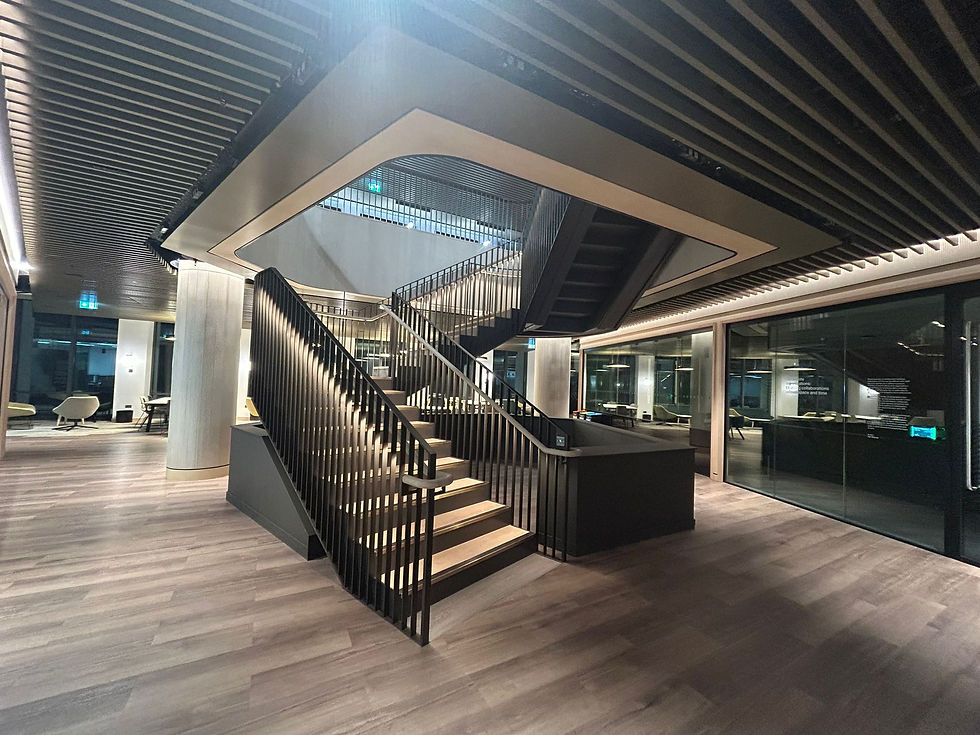
Staircases, balustrades, feature steelwork and specialist access systems frequently interact with multiple trades and are highly visible within the finished building.
Small coordination issues can quickly become programme issues.
Early Fabricator Engagement allows these interfaces to be reviewed in detail, ensuring fabrication, finishes and installation methodologies align with the wider construction programme.
Looking Beyond Fabrication Cost
When assessing value, it is easy to focus purely on package cost.
However, the true cost of programme risk often emerges elsewhere through delays, additional labour, redesign and disruption to following trades.
A fabrication package that saves time on site, reduces variations and improves installation efficiency can deliver significantly greater value across the project lifecycle than its initial cost
may suggest.
Building Programme Certainty Through Collaboration
Construction projects rarely fail because of a single issue.
More often, delays result from a series of small challenges that compound over time.
Early Fabricator Engagement helps remove many of those risks before they reach site.
By combining design intent with practical delivery expertise at the earliest possible stage, project teams can improve coordination, increase certainty and create more efficient pathways to delivery.
In an industry where programme performance is often measured in days rather than weeks, those early conversations can make all the difference.


Comments